
Author: Apex Engineering Sales | Last updated: July 15, 2026
Quick Answer
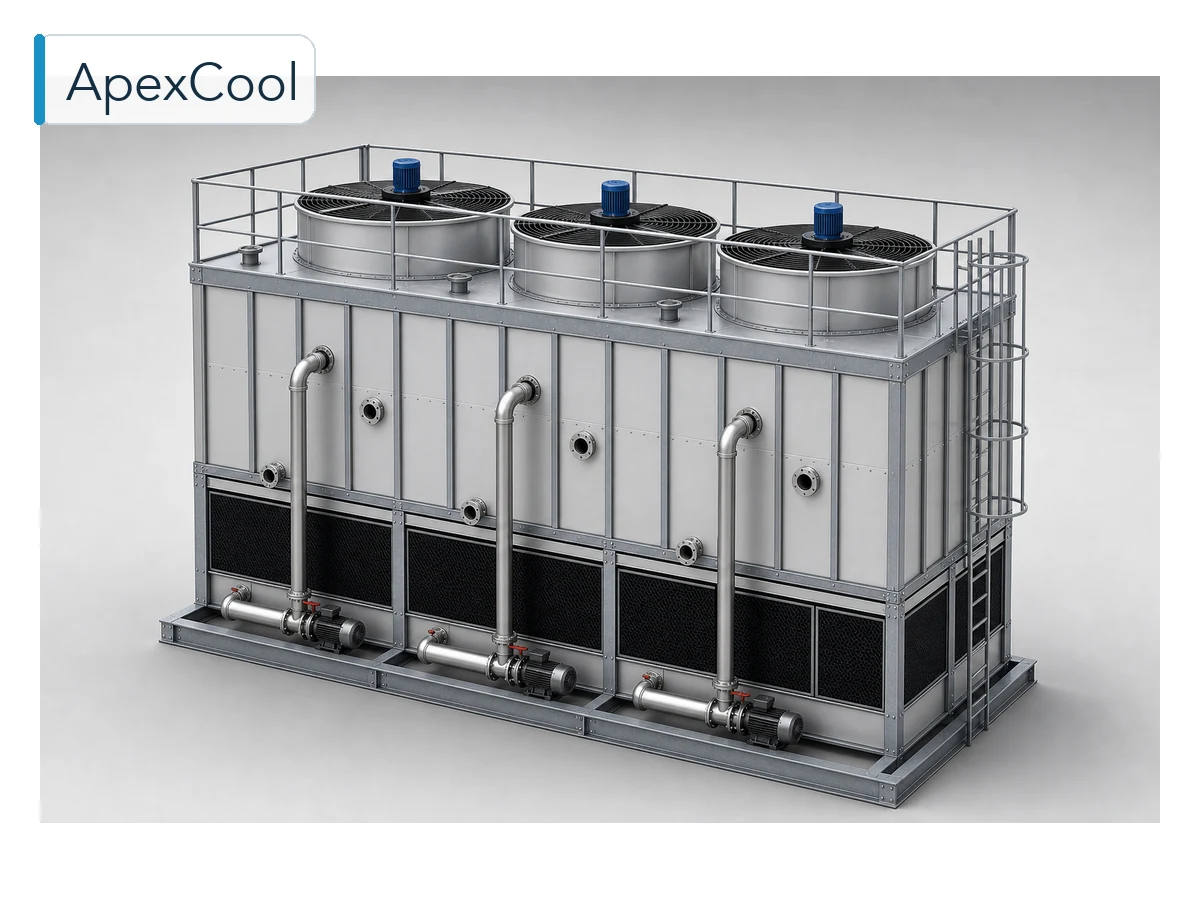
Cooling tower installation should provide a stable foundation, clear airflow path, safe maintenance access, correct piping support, proper electrical connection and enough clearance to prevent hot air recirculation.
Site and Foundation
| Item | Why it matters | Practical note |
|---|---|---|
| Foundation | Supports tower load and vibration control | Follow project drawings and local code |
| Air inlet clearance | Prevents airflow restriction | Confirm with layout review |
| Discharge clearance | Reduces hot air recirculation | Avoid blocked discharge areas |
| Piping support | Prevents stress on tower connections | Use independent supports |
| Maintenance access | Supports safe inspection | Provide working space around key components |
Airflow and Clearance
- Review layout drawing before delivery.
- Confirm foundation dimensions and load capacity.
- Check inlet and discharge clearance.
- Install piping without forcing tower nozzles.
- Verify motor rotation and electrical protection.
- Complete commissioning records.
Engineering Review Note
Final cooling tower selection should be confirmed with complete project data, operating conditions and site requirements.
Piping and Electrical Checks
- Placing towers too close to walls.
- Unsupported piping loads on tower connections.
- Poor access for fill, fan or basin maintenance.
- Ignoring local safety and lifting requirements.
Related Apex Cooling Tower Pages
- Cooling Tower Products
- https://apextowerchina.com/customer-case-center/
- https://apextowerchina.com/request-a-quote/
- Request a Quote
- Contact Us
FAQ
Why does airflow clearance matter?
Restricted airflow or hot air recirculation can reduce cooling performance and increase operating problems.
Can a cooling tower be installed indoors?
Some installations are possible with engineered ventilation, but airflow, discharge and access must be reviewed carefully.
What should be checked before startup?
Check foundation, piping, basin cleanliness, water level, fan rotation, motor wiring, nozzle condition and safety guards before operation.
Related Articles
Next step: If you already have project data, send your RFQ here and include flow, hot/cold water temperatures, design wet-bulb temperature, site altitude, power supply, noise target, water quality and material preference.